Platinum / Palladium Prints
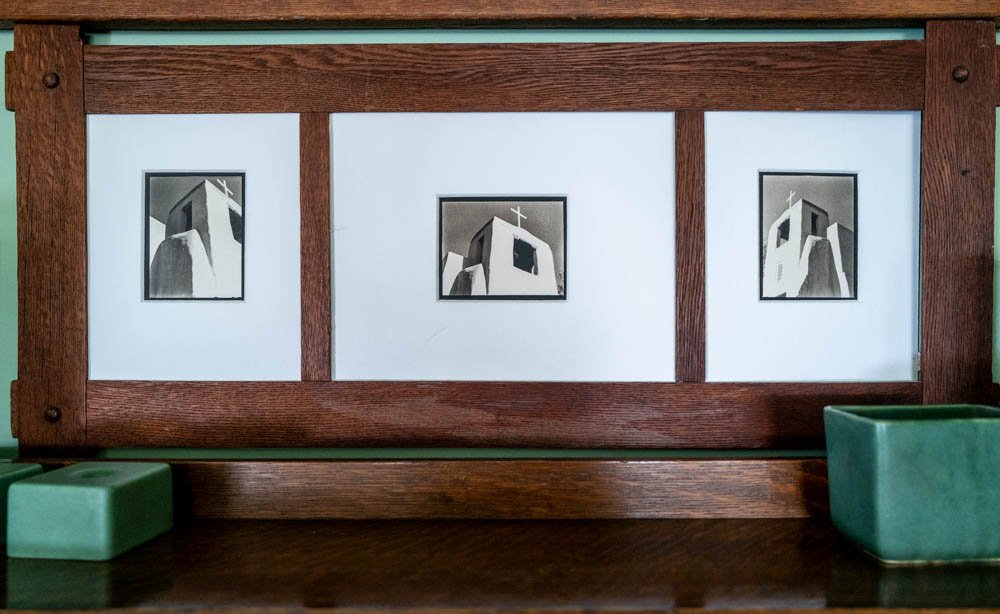
Church, Santa Fe, New Mexico - triptych; three 4×5 inch images, printed in pt/pd
PLATINUM / PALLADIUM PRINTS (pt/pd)
After taking several technical workshops with master printer Arkady Lvov, I spent countless hours learning to how to print using the platinum / palladium process. The pt/pd prints shown on these pages were made from original, in-camera negatives; at first I was using 4×5 inch view camera, then gradually moving up in size - to 8×10, then 11×14, then the panoramic aspect of 7×17, finally with the enormous 12×20 camera. Printing pt/pd requires using the ‘contact’ method, so if you want large sized prints, you needed large sized negatives - thus my ever-increasing camera size. The method somewhat simply places the negative on top of the platinum / palladium coated paper (the formula mixed, then gently brushed onto paper, then dried), pressed tight against a glass plate (or in a vacuum frame), exposed to a very high intensity light (or in direct sunlight), then wet-processed with a developing agent, followed by a series of clearing baths, washing and drying. All this is done in dim / low intensity incandescent light, unlike traditional darkroom conditions - compete darkness for film, or red ‘safe’ light for printing.
Technology now allows for digitally enlarged negatives - either from scanned film, or digitally captured images, to then be used for making positive prints using the traditional pt / pd process. A ‘hybridization’ of what is arguably the most stunning and most archival printing process known - platinum / palladium; an analogue print utilizing digital media.
NOTE: the images shown on this web-site are unjustly rendered / poor resolution, but even if the resolution is improved, there is nothing like experiencing a platinum / palladium print in-person. Those clearly visible jet-black brush strokes are the exposed overflow of the pt/pd coating, they can be covered with a matt, or not. The penciled numbers on the bottom of the photographs are the pt/pd formula, this information is noted in order to reproduce additional prints.
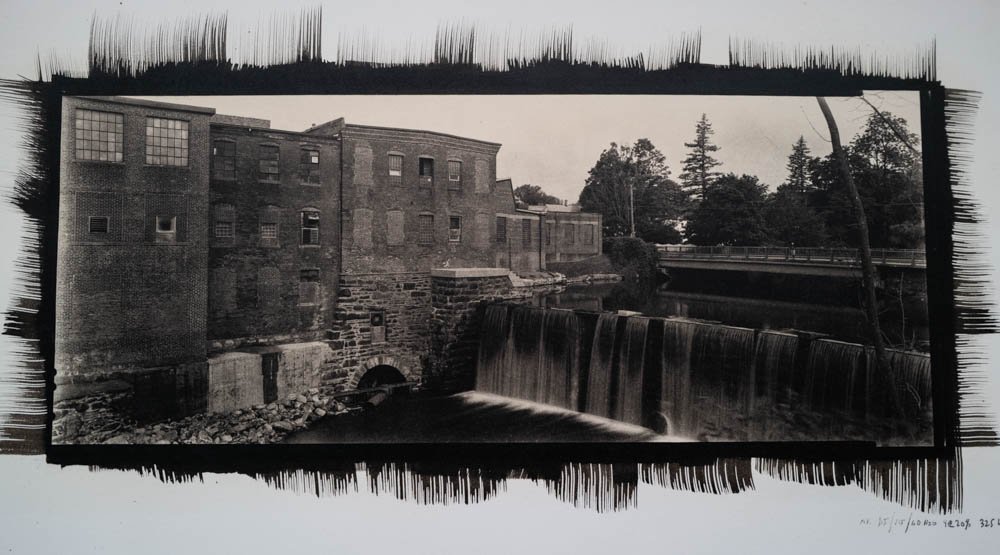
Crane's Mill, Dalton, MA, 7" x 17", pt/pd
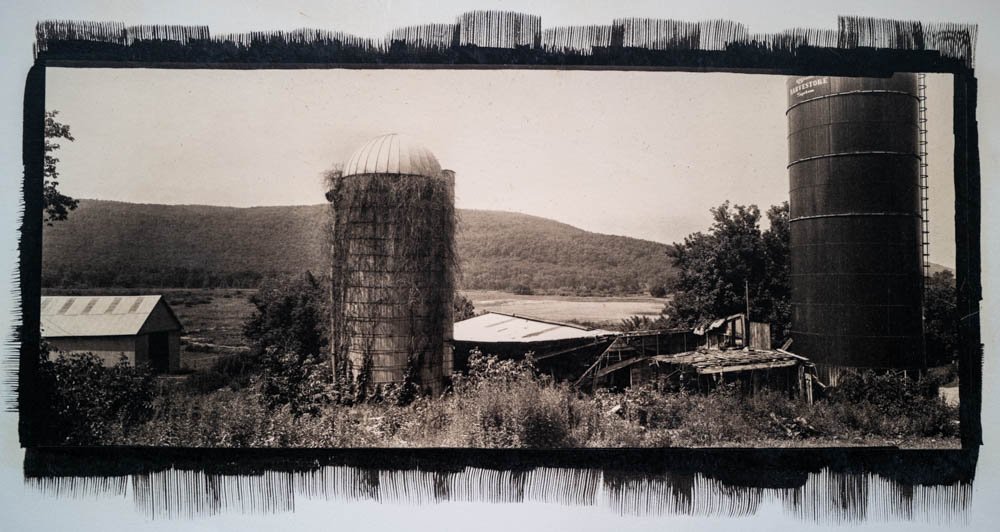
Farm Structure & Silos, Alford, MA, 7" x 17", pt/pd
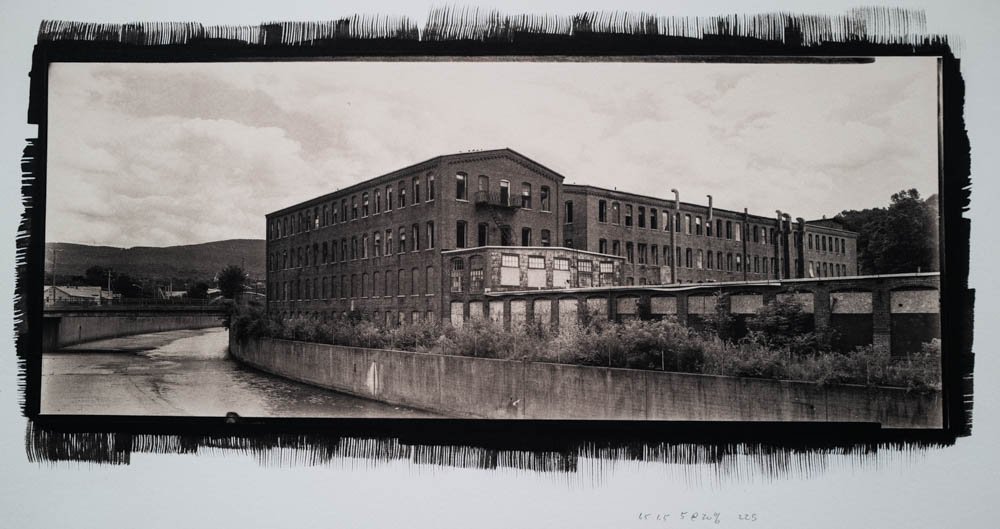
Mill on the Hoosic River, North Adams, MA, 7" x 17", pt/pd
CYANOTYPE
Similar to a platinum / palladium print, cyanotypes are made by coating paper with a different set of chemistry, allowed to dry, sandwiched together with a negative in a print frame (or vacuum press), exposed to a high intensity light (or sunlight), then washed several times and set to dry. Many other materials besides paper can be used (cloth, leaves, wood), and a wide range of tones can be achieved - other than the original Prussian blue, using teas, coffee, chocolate, red wine, bicarbonate of soda, etc.
Alternatively, many beautiful images can be made using this process but without the negative - by simply placing objects on the dried-coated material, exposing then follow with the wet process, these are called ‘photograms’, and this most primitive form of photography can also be performed using silver-based papers, or dozens of other printing process.
Cyanotypes are a very early process invented by Sir John Herschel (a polymath who contributed in many fields including mathematics, astronomy, physics, etc., he also coined the word ‘photography’, and the rather apropos phrase ‘positive / negative’).
Anna Atkins was close friends with Herschel, as well as W.H. Fox Talbot, another important British inventor who created the ‘calotype’, a very early photographic process. Atkins was a renown collector of algae and botanicals, she created thousands of stunning botanical cyanotypes (photograms), and is historically noted as the first woman photographer.
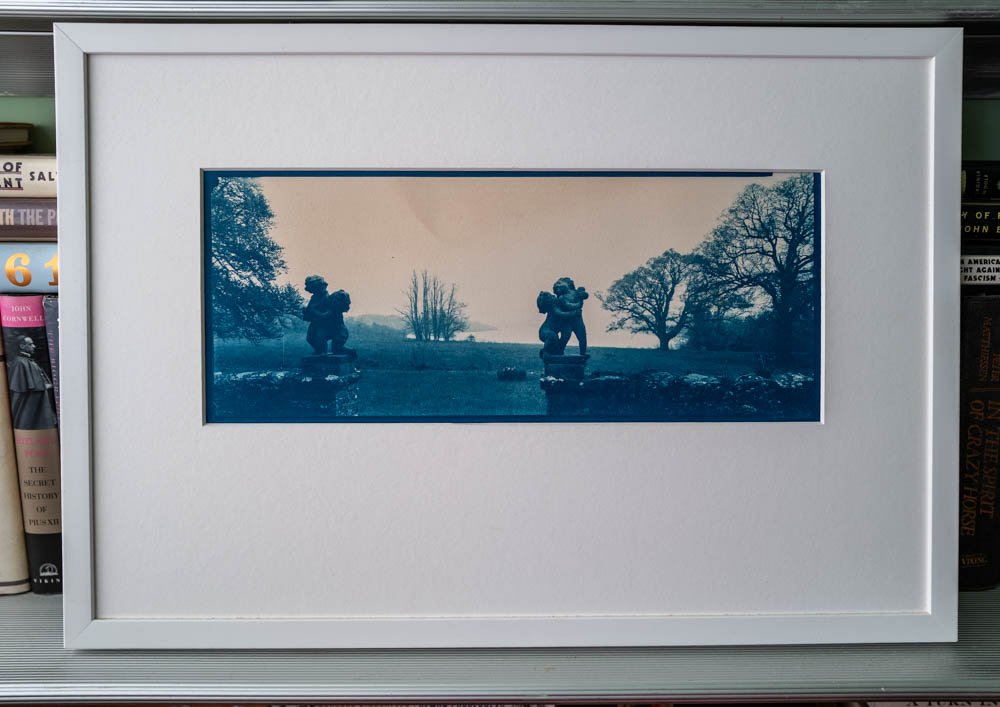
The example on the right is from an original 7×17 negative, shot in-camera, of a garden and lake in Northern Ireland.
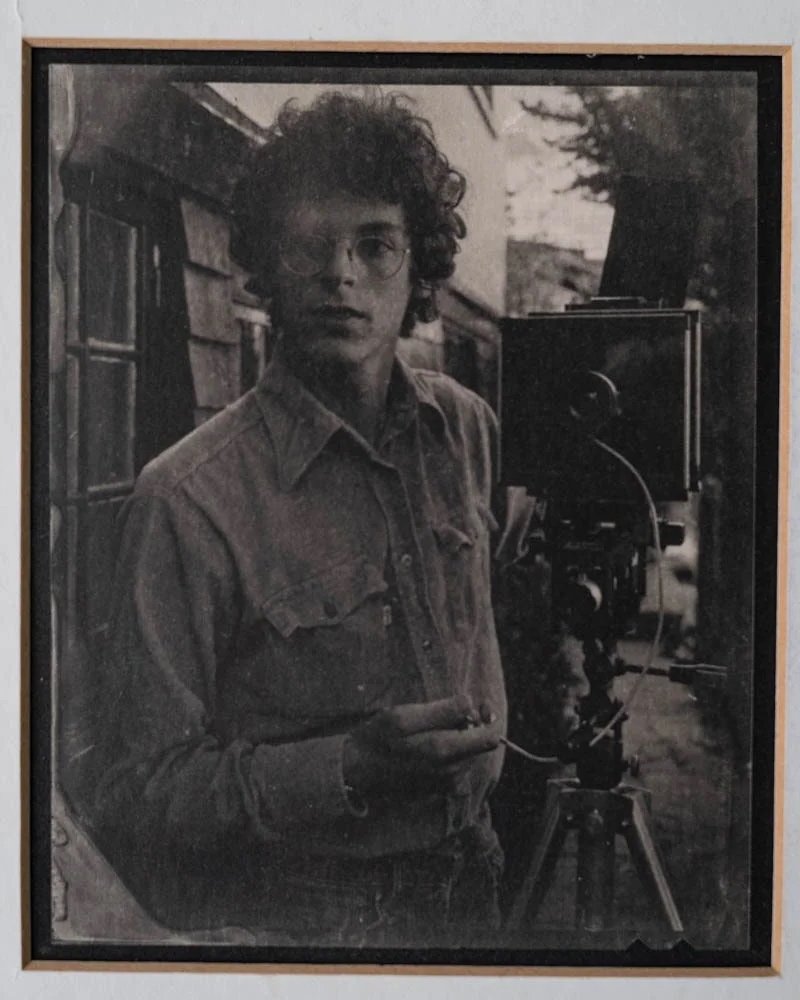
(self) portrait of the artist as a young man c. 1976